Understanding your eye care team
Three different professionals provide eye care in New York, and their training differs a great deal. Knowing who does what helps you get to the right person the first time.
Three different professionals provide eye care in New York, and their training differs a great deal. Knowing who does what helps you get to the right person the first time.
All three work with your eyes, but their training and scope of practice are very different.
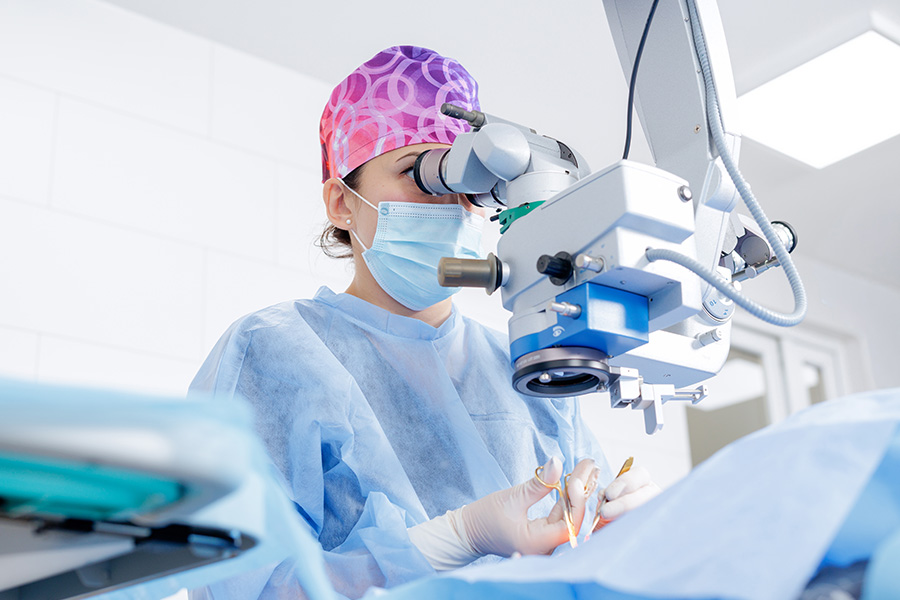
An ophthalmologist is a physician, either a Doctor of Medicine (MD) or a Doctor of Osteopathic Medicine (DO), who specializes in the medical and surgical care of the eyes.
Training: Four years of college, four years of medical school, and at least four years of residency, including three or more years in ophthalmology. Many complete additional fellowship training in a subspecialty such as retina, glaucoma, cornea, or pediatric eye care.
What they do: Routine eye exams, glasses and contact lens prescriptions, diagnosis and medical treatment of eye disease, and eye surgery. Because they are trained as physicians, ophthalmologists also recognize when an eye finding points to a condition elsewhere in the body, such as diabetes or high blood pressure.
See an ophthalmologist for: eye surgery, eye disease such as glaucoma, cataract, or macular degeneration, eye injury, sudden vision changes, or eye symptoms related to a medical condition.
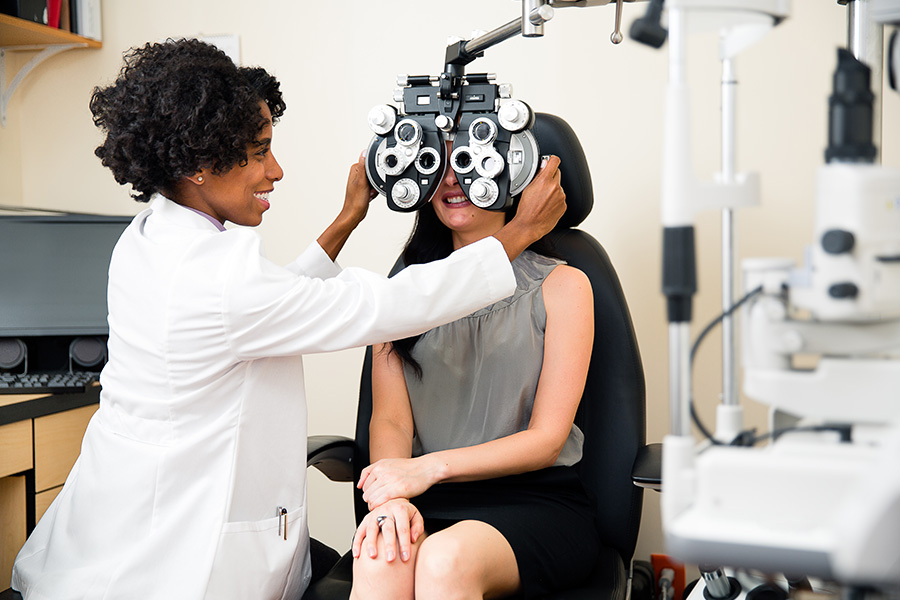
An optometrist holds a Doctor of Optometry (OD) degree.
Training: A four year program at an accredited college of optometry, following undergraduate study. Optometrists do not attend medical school or complete a medical residency.
What they do: Eye examinations, vision testing, and correction of refractive error with glasses and contact lenses. New York State licensure also permits optometrists to detect and manage certain eye conditions within a defined scope.
See an optometrist for: routine vision checks and an updated glasses or contact lens prescription.
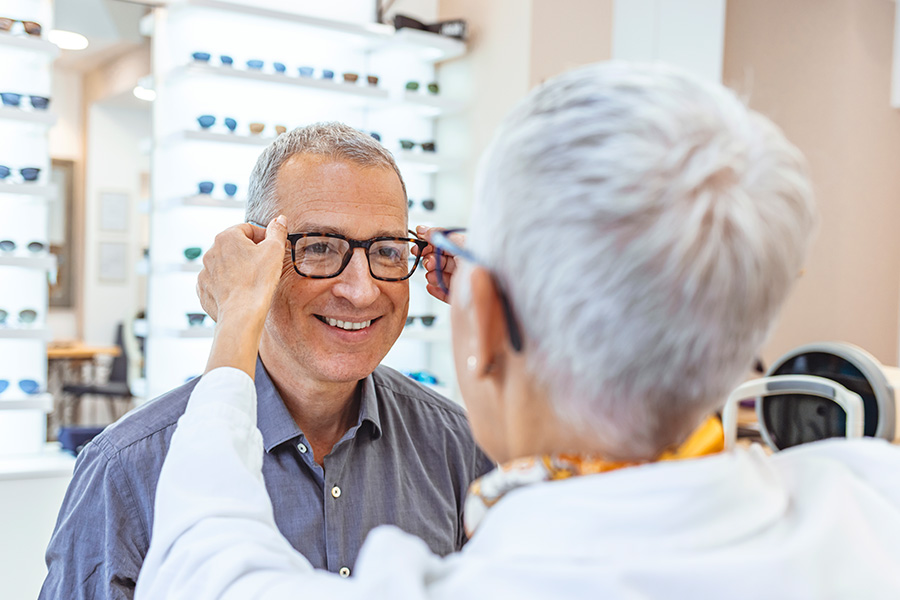
An optician is trained to fit and dispense eyeglasses and contact lenses. Opticians are not doctors and do not examine eyes or diagnose eye conditions.
Training: Opticians in New York are licensed by the State Education Department after completing ophthalmic dispensing education or supervised training and passing licensing examinations.
What they do: Fill eyeglass and contact lens prescriptions written by an ophthalmologist or optometrist, help you choose frames and lenses, take measurements, and adjust and repair glasses.
See an optician for: new glasses or contact lenses once you have a prescription, and fitting, adjustment, or repair of your eyewear.
If you are having symptoms, start with an ophthalmologist. If you simply need your glasses updated, an optometrist or your ophthalmologist can help.
The National Consumers League also publishes guidance on choosing an eye care professional.
NYSEPS represents the state’s ophthalmologists. Get in touch and we’ll point you in the right direction.